
Digital Signage for Airports
Operationally Critical Communication Infrastructure for Modern Terminals
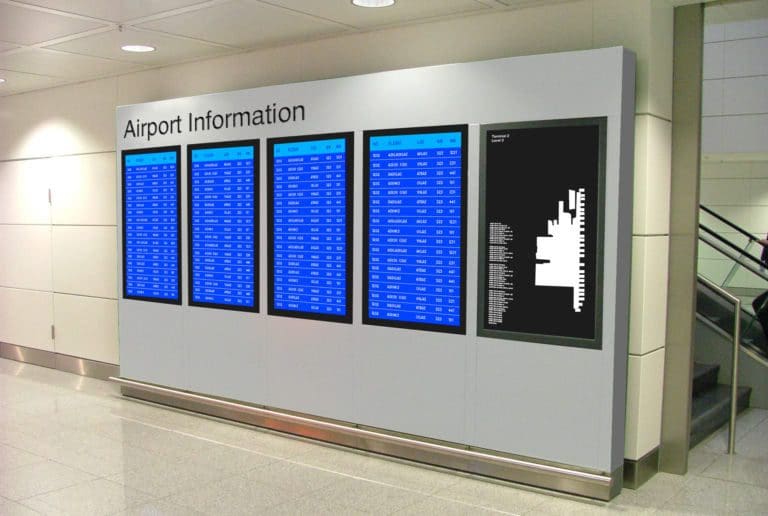
Digital Signage for Airports That Improve Operational Accuracy and Improve Passenger Flow
Digital Signage for Airports enables operators to manage passenger information, commercial messaging, and updates across terminals in real time. Airport teams rely on display networks to control flight information, gate changes, security notices, retail promotions, wayfinding guidance, and emergency messaging from central systems.
Airports operate as complex ecosystems. They handle high passenger volumes, strict security requirements, rapid schedule changes, and also multi tenant environments. Therefore, communication systems must respond instantly and reliably. Static signage cannot support this level of complexity.
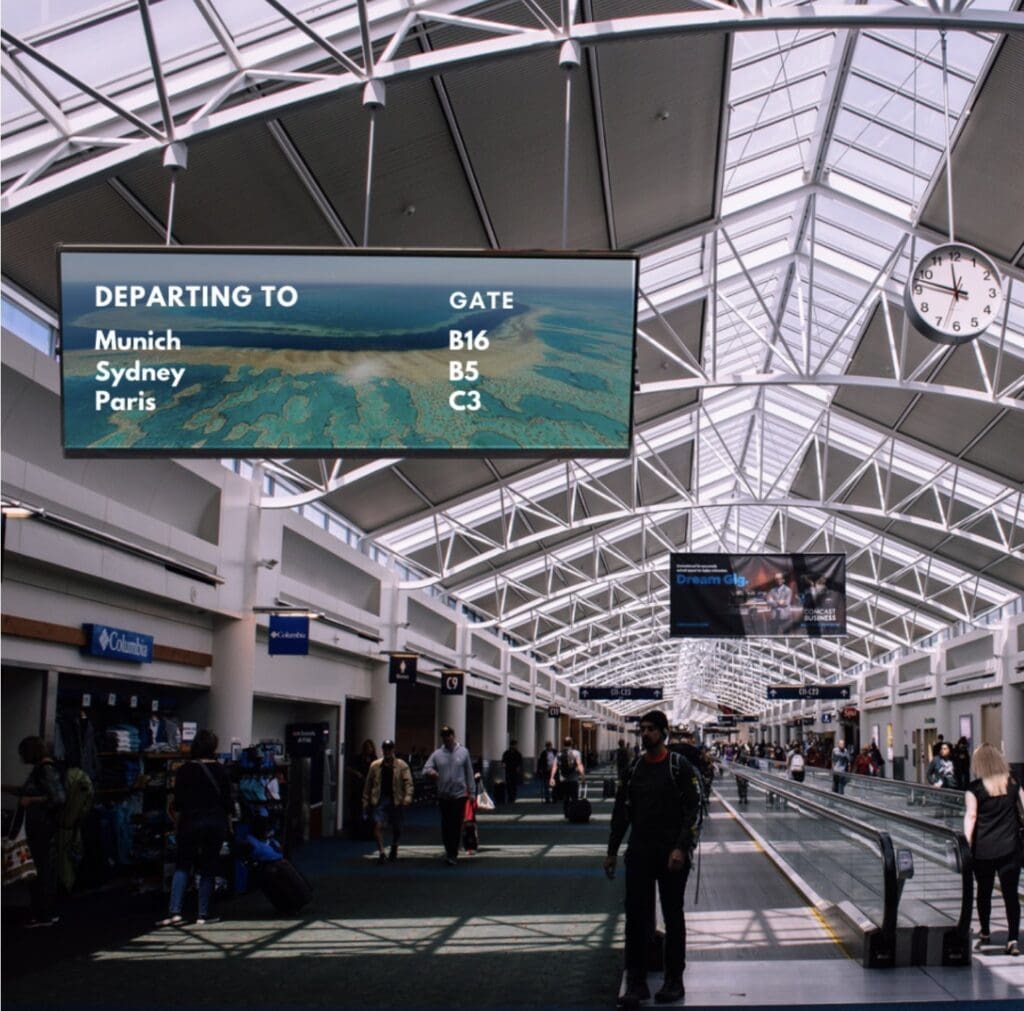
Airport Digital Signage provides dynamic control over timetable screens, advertising panels, check-in displays, and way-finding kiosks. As a result, operators maintain operational accuracy, reduce confusion, and also improve passenger flow. At the same time, commercial teams can also generate advertising revenue and promote on site retail.
This solution serves airport authorities, terminal operators, airlines, ground handlers, retail concessionaires, and security teams who require coordinated, real time communication across multiple touch points.
What Problems This Solution Solves
Airports manage constant schedule changes. Without dynamic updates, passengers miss gates, crowd service desks, and delay departures. Digital signage eliminates manual updates and reduces human error.
As discussed, passenger confusion increases congestion. Likewise, poor way finding causes bottlenecks at security and boarding areas. This is where digital displays provide a solution. This is because clear, real time information displays improve flow and reduce stress.
Additionally, operational silos create inconsistencies. For example, airlines, ground staff, and airport management often communicate separately. Having centralised control aligns messaging across airport timetable screens and public information displays as a result.
Another issue facing airports is when revenue leakage occurs due to under used advertising inventory. Digital displays can also help solve this issue. For example digital networks can enable adjustable campaigns, time based targeting, and real time promotion adjustments that increase revenue.
Finally, emergency communication gaps also expose airports to risk. Teams require instant override capabilities for evacuation messaging, weather alerts, and also security incidents. Digital displays can help airports achieve this with ease.
Technologies Used in Digital Signage for Airports
Content Management Systems (CMS)
Operators manage network wide messaging from central dashboards. Content Management Systems allow role based access that ensures governance control across airlines and terminal zones.
Data Integration and API Connectivity
Airport systems also integrate with flight data feeds, baggage systems, security databases, and queue monitoring tools. Automated data feeds eliminate manual updates and also help maintain real time accuracy.
Display Hardware and Environmental Protection
Airports require high-brightness displays, narrow bezel video walls, outdoor-rated enclosures, and 24/7 operation capability. The right hardware selection depends on lighting conditions, temperature exposure, and also mounting requirements.
Network Infrastructure and Redundancy
Reliable connectivity ensures uptime. A secure network infrastructure and redundancy allows operators to use redundant servers and secure network segmentation to maintain system resilience.
Analytics and Reporting Tools
Performance dashboards measure uptime, content performance, as well as advertising revenue metrics. Teams use this data to refine scheduling and operational messaging.
Where Digital Signage for Airports Are Used
Digital signage for airports are perfect for a range of uses, including:
- Check-in halls
- security checkpoints
- immigration areas
- boarding gates
- baggage claim zones
- lounges
- transfer zones
- retail areas
- car rental desks
- curb side drop off zones
- staff areas maintenance corridors
- VIP terminals
- remote stands
- airport parking facilities
Usage varies by environment. In check-in areas, operators value flight information accuracy and airline branding. At security, teams focus on queue updates and regulatory messaging. At gates, staff organise boarding announcements and last minute changes. In retail zones, marketing teams promote offers and influence dwell time spending. Consequently, the content strategy must adapt to priorities of each zone.
Business Impact, ROI and Measurable Outcomes
Digital Signage for Airports influences performance at multiple levels.
First, it improves operational efficiency. This is because staff are able to update flight data automatically from integrated systems. As a result, this reduces manual intervention. Additionally, fewer errors also mean fewer boarding delays. Operators are also able to track metrics such as on-time departure rates and passenger flow efficiency.
Second, Airport digital displays also increase non-aeronautical revenue. Airports depend heavily on retail, food and beverage, and advertising income. Targeted promotions on airport digital signage encourages impulse purchases. As a result, commercial teams measure increases in dwell time spending, ad fill rates, and campaign conversion.
Third, digital displays also reduce operational costs. This is because digital displays allow airports to replace printed materials and reduce associated labour costs. Over time, lower print expenditure and reduced staffing improves cost control.
Fourth, they also strengthen brand consistency. Airports maintain unified visual standards across terminals. Therefore reinforcing trust and professionalism as a result.
Finally, commercial digital displays support scalability. As terminals expand or passenger volumes grow, commercial digital display networks can extend without having to replace an entire infrastructure.

Flight Information Display Systems (FIDS)
Operators deploy airport timetable screens to present arrivals, departures, delays, gate changes, and also boarding status. They also integrate displays directly with aviation data feeds. As a result, passengers receive accurate, synchronised information. Additionally, staff also reduce repetitive announcements and manage gate transitions more smoothly.
Wayfinding and Passenger Navigation
Airports use interactive kiosks and directional screens to guide passengers through complex terminals. As a result, this improves flow between check-in, security, gates, and baggage claim. Therefore decreasing congestion and also improving passenger satisfaction.
Queue Management and Security Updates
Security teams use digital displays to show real time wait times and procedural guidance. As a result, when queues grow, managers can easily redirect passengers. Therefore, optimising throughput and reducing perceived waiting times as a result.
Retail and Advertising Networks
Commercial teams also use airport digital displays to schedule promotions by time of day, flight destination, or passenger demographic. For example, duty free promotions align with outbound international flights. This targeted approach increases campaign relevance and advertising value as a result.
Emergency and Crisis Communication
Airport authorities use airport digital displays to configure system wide override protocols. For example, during incidents, they push priority alerts across every screen instantly. This capability improves response coordination and passenger safety as a result.
Key Considerations When Choosing Digital Signage for Airports
Environment Fit
It is important to assess lighting conditions, passenger density, and also viewing distances when selecting a digital display for your setting. Screen brightness and size should also be selected accordingly.
Operational Workflow Impact
Evaluate how staff update content. Digital Display systems should automate flight data and minimise manual input.
Content Control and Governance
Define role-based permissions. Airports host multiple stakeholders, so access control prevents messaging conflicts.
Integration Needs
Confirm compatibility of digital displays with flight information systems, advertising platforms, queue management software, and also security systems.
Reliability and Uptime
Airports operate continuously. The right digital display solution must support 24/7 use with failover mechanisms.
Scalability
It is also important to plan for terminal expansion, additional gates, or new retail zones when selecting a digital display system. A digital display system should allow for growth.
Long Term Ownership
Consider maintenance, energy consumption, lifecycle replacement planning, and support availability when selecting the right airport digital display for your setting.
How Airports Use Digital Displays Effectively

Successful airports define a clear content hierarchy. They prioritise critical flight information, then layer commercial messaging around it.
They also establish governance frameworks that assign responsibility across airlines, retail teams, and airport management. This prevents conflicting updates as a result.
Aditionally, they also implement phased rollouts, starting with high traffic zones. Teams test integration and refine workflows before expanding network coverage.
They also measure performance continuously. KPIs include passenger satisfaction scores, advertising revenue per screen, display uptime, and boarding delay reductions.
Finally, airports tend to avoid common mistakes such as overloading screens with cluttered content, ignoring maintenance planning, or failing to train staff on CMS usage. All of these considerations allow airports to use digital displays effectively.
Why Choose MetroSpec's Airport Digital Display Solutions
MetroSpec supports airport authorities and integrators with application level expertise in Digital Signage for Airports. Our team focuses on system architecture, integration planning, hardware specification, and also long term scalability strategy.
Rather than offering generic display packages, MetroSpec aligns solutions with operational workflows, security requirements, and commercial objectives that are unique to airport environments.
Frequently Asked Questions
How much does Digital Signage for Airports cost?
Costs vary based on screen quantity, hardware specification, integration complexity, and network scale. Airports typically evaluate capital expenditure against advertising revenue uplift, operational efficiency gains, and print cost reduction.
Is Airport Digital Signage suitable for small regional airports?
Yes. Smaller airports often benefit significantly because automated flight updates reduce staffing requirements. Scalable systems allow gradual expansion.
Can Airport timetable Screens integrate with existing flight information systems?
Most modern solutions integrate via APIs or data feeds. Integration planning ensures real-time synchronisation and eliminates manual entry.
How scalable are airport display networks?
Operators design networks in modular segments. As passenger volumes increase or terminals expand, teams add displays without rebuilding the entire infrastructure.
Who manages the content?
Airport authorities typically control core flight information. Retail teams manage commercial zones. Role-based CMS access ensures structured governance.
Request a Digital Display Consultation
Airports operate under constant pressure to maintain accuracy, safety, and commercial performance. Digital Signage for Airports strengthens communication, improves passenger flow, and unlocks measurable revenue opportunities.
If you are evaluating Airport Digital Signage or upgrading Airport timetable Screens, focus on operational integration, governance structure, and long term scalability. A structured approach will ensure the system supports both immediate operational needs and future growth ambitions.