
Digital Signage for Stadiums & Arenas
Strategic Communication Infrastructure for High Capacity Sports and Entertainment Venues
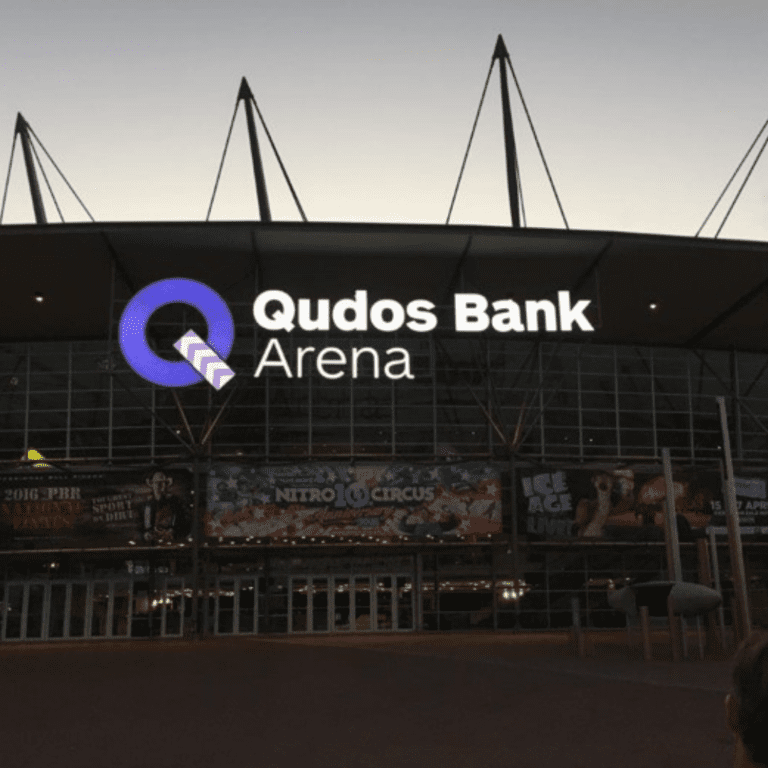
Introduction to Digital Signage for Stadiums & Arenas
Digital signage for stadiums and arenas gives venue operators real time control over communication across large, high density environments. Event teams also use digital displays to coordinate messaging across concourses, hospitality suites, entrances as well as external zones from a central platform.
Stadiums and arenas operate under intense time pressure. For example, crowds arrive in waves, schedules shift, sponsors demand visibility and safety requirements remain strict. Therefore, operators need systems that respond instantly and also scale without disruption.
As a result of these intense time pressures, venue owners, sports franchises, event promoters and facility managers rely on digital signage to guide fans, promote sponsors and also manage crowd flow. Through the use of digital displays, they aim to maximise per capita spend and protect broadcast quality environments. Digital signage also supports operational control while driving commercial return.
What Problems This Solution Solves
Large venues face complex operational challenges. Crowd congestion, last minute schedule changes and sponsor obligations create constant pressure.
First, static signage cannot adapt to dynamic event conditions. When gates change or delays occur, staff must manually redirect guests. This increases confusion and slows entry.
Second, fragmented sponsor messaging reduces commercial value. For example, if teams cannot coordinate content across all screens, brand exposure becomes inconsistent.
Third, long queues at concessions and restrooms reduce fan satisfaction and limit spending time.
Digital signage solves these issues. Managers update directions instantly, coordinate sponsor campaigns centrally and display real time queue or wait information. As a result, venues maintain control during high attendance events.
Digital Display Technologies For Stadiums and Arenas
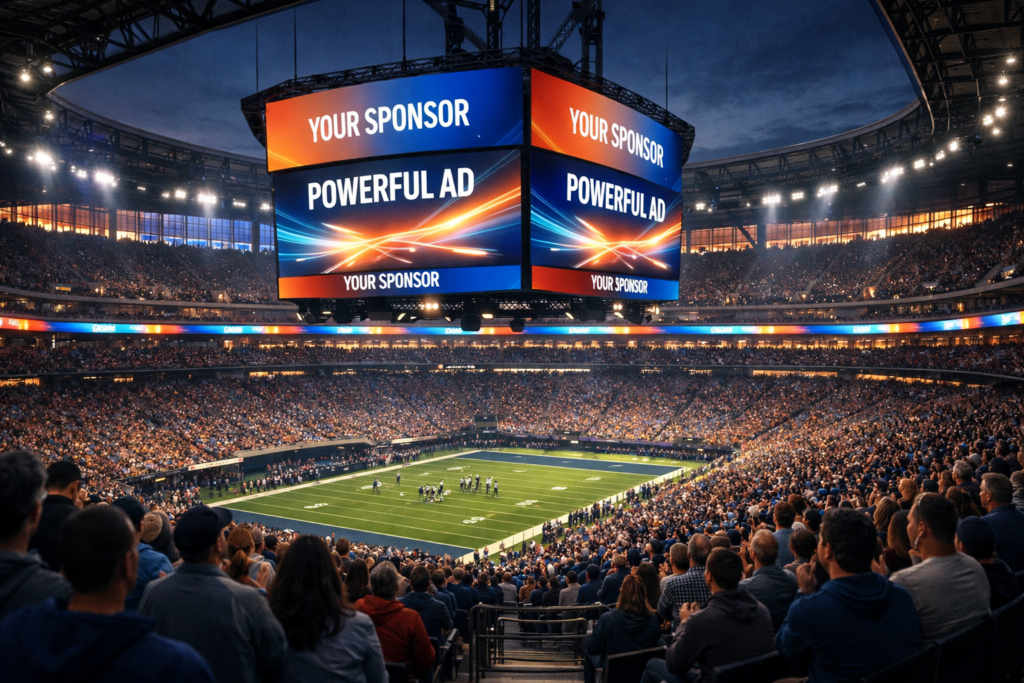
Teams deploy high resolution LED video walls for bowl displays and exterior facades. In addition, operators configure LCD networks for concourses and hospitality areas.
Content management platforms allow central scheduling across hundreds or thousands of endpoints. Therefore, marketing and operations teams coordinate sponsor campaigns and live updates without conflict.
Organisations integrate signage systems with ticketing platforms, live scoring feeds and advertising servers. As a result, screens display real time game data and targeted advertising.
Network engineers establish robust wired infrastructure with redundancy to maintain uptime during peak demand. Furthermore, venues implement monitoring tools to detect hardware issues before events begin.
Typical Deployment Formats in Digital Signage for Stadiums & Arenas Environments
Typical digital signage solutions for stadiums & arenas include:
- Large scale exterior LED facades
- Centre hung scoreboard displays
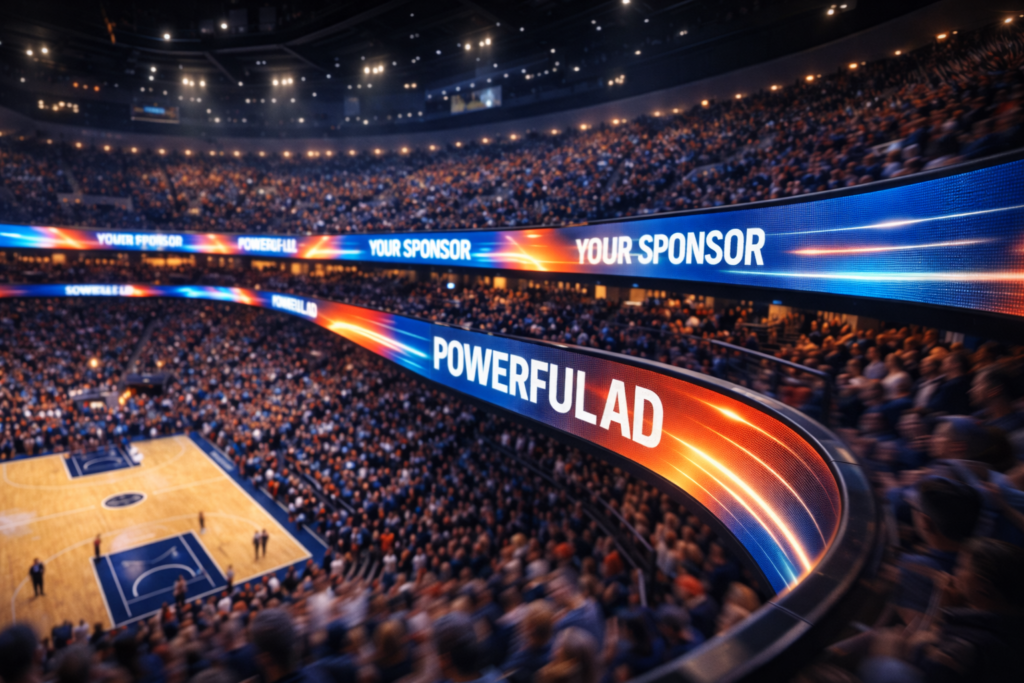
- LED ribbon boards
- Concourse LCD networks
- Digital menu boards
- Interactive kiosks
- Hospitality suite displays
- Car park guidance screens
- Mobile digital totems
Organisations select formats based on viewing distance, brightness requirements and content purpose. For example, scoreboard displays require high resolution and broadcast integration. Meanwhile, concourse screens prioritise readability at close range. Operators also consider structural load, power availability and maintenance access before deployment. You can read more about how outdoor displays enhance stadium & arena events here.
Where Digital Signage for Stadiums & Arenas Are Used
Digital displays are perfect in stadiums & arenas in the following locations:
- main entrances
- exterior facades
- ticketing zones
- security checkpoints
- concourses
- food and beverage areas
- merchandise stores
- hospitality suites
- VIP lounges
- player tunnels media zones
- car parks
- transport hubs
Usage varies by zone. For example, exterior LED displays promote upcoming events and sponsors. Meanwhile, concourse screens provide wayfinding and queue updates. Hospitality areas focus on premium branding and live match feeds. Therefore, operators design content strategies based on audience type, dwell time and event phase.
Business Impact, ROI and Measurable Outcomes
Digital signage for stadiums and arenas influences revenue, efficiency and sponsor value.
Operationally, teams reduce print costs and manual updates. Furthermore, staff handle fewer routine enquiries about seating and facilities.
Commercially, venues increase concession sales and merchandise purchases through targeted promotions. For instance, operators highlight short queue zones to redistribute demand. Consequently, more fans complete purchases before returning to their seats.
Sponsorship revenue also improves. Marketing teams deliver measurable impressions across LED ribbons, video walls and also concourse displays. This strengthens sponsor renewal negotiations as a result.
Key performance indicators include per capita spend, sponsor impression counts, queue time reduction, concession throughput rates as well as average dwell time in retail areas.
Over time, data driven content scheduling enhances campaign effectiveness as well as operational planning.
Event Day Wayfinding and Gate Management
Stadiums host tens of thousands of attendees. Therefore, clear gate and seating guidance prevents bottlenecks.
Operations teams update directional screens in real time. As a result, fans reach their sections faster and entry flow improves.
Sponsor Activation and Advertising
Sponsors expect premium visibility during live events. Marketing teams schedule dynamic campaigns across multiple screen types.
Consequently, venues deliver coordinated exposure across concourses, LED ribbons and hospitality areas. This increases brand recall and measurable value.
Concession and Merchandise Promotion
Food and beverage outlets drive significant revenue. However, long queues discourage purchases.
Digital menu boards display pricing, promotions and bundle offers. Meanwhile, queue screens direct fans to shorter lines. Therefore, venues improve throughput and increase average transaction value as a result.
Emergency Messaging and Crowd Safety
Safety remains a top priority. Security teams must communicate quickly during incidents.
Operators override standard content to display clear instructions across all screens simultaneously. Consequently, venues guide crowds efficiently and reduce risk.
Key Considerations When Choosing A Digital Display Solution for Stadiums & Arenas
Environment suitability remains critical. Venues must assess brightness levels, structural constraints and weather exposure.
Operational workflow integration also matters. Teams should align signage control with event scheduling and sponsor management processes.
Integration capability determines long term flexibility. Managers must confirm compatibility with scoring systems, advertising servers and safety platforms.
Reliability and redundancy protect event day performance. Therefore, venues invest in backup systems and proactive monitoring.
Finally, scalability supports future expansion, additional sponsorship inventory and technology upgrades.
How Stadiums & Arenas Use Digital Displays Effectively
Successful venues begin with a clear content hierarchy. They define what fans need at each stage: arrival, entry, event, exit. Consequently, every screen supports a defined purpose.
Marketing teams coordinate sponsor campaigns centrally. Meanwhile, operations staff control directional and safety messaging. This structure prevents conflicts and protects brand consistency.
Venues also review performance after each event. They analyse concession revenue, queue metrics and sponsor exposure data. Therefore, they refine placement and scheduling continuously.
Common mistakes include overcrowded layouts, inconsistent sponsor rotation and insufficient testing before event day. However, disciplined planning avoids these risks.
Why Choose MetroSpec's Digital Display Solutions
MetroSpec supports stadium and arena operators with application focused digital signage strategies aligned to operational scale and commercial objectives.
The team evaluates crowd flow, sponsor models and technical infrastructure before recommending architecture. As a result, venues gain scalable systems that strengthen fan experience, protect uptime and increase measurable revenue.
Frequently Asked Questions
How much does digital signage for stadiums and arenas cost?
Costs depend on screen scale, LED resolution, integration depth and infrastructure requirements. However, venues should assess lifetime value and sponsor revenue potential rather than upfront hardware costs alone.
Can digital signage integrate with live scoring systems?
Yes. Most platforms integrate with scoring feeds and event data systems, enabling real time updates across displays.
Is digital signage suitable for outdoor stadium environments?
Yes. Operators deploy high brightness, weather resistant LED systems configured for outdoor conditions.
How scalable are these systems for multi venue operators?
Cloud based management platforms allow central oversight across multiple stadiums or arenas. Therefore, organisations maintain consistency while scaling.
Who manages content on event day?
Typically, marketing teams handle sponsor campaigns while operations control wayfinding and safety messaging. Clear governance ensures rapid response and accuracy.
Request a Digital Display Consultation
Digital signage for stadiums and arenas delivers operational control, stronger sponsor value and enhanced fan engagement. When venues align technology with crowd strategy and revenue goals, they transform screens into performance assets rather than simple displays.
With structured planning, integrated systems and disciplined governance, stadium operators build communication infrastructure that scales with future events and evolving fan expectations.