
Digital Signage for Tourism Applications
Strategic Visitor Communication for Resorts, Attractions and Leisure Destinations
Solutions Enabling Dynamic Control of Visitor Communication
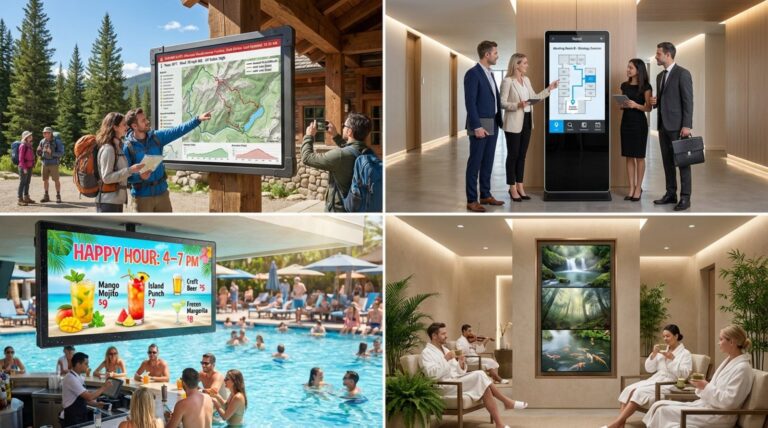
Digital signage for tourism applications gives operators dynamic control over visitor communication across resorts, attractions and leisure centres. Instead of relying on static posters, teams publish real time information across screens, kiosks and large format displays.
Tourism environments change quickly. For example, weather shifts, events fill up, schedules adjust and guest expectations rise. Therefore, managers need tools that support fast updates and consistent messaging. Digital signage helps teams guide guests, promote services and reduce pressure on staff.
Resort operators, theme parks, visitor attractions, holiday parks, beaches, tourist hot spots, spas and leisure complexes all rely on clear communication. However, they also aim to increase dwell time, drive secondary spend and protect brand standards. Digital signage supports these goals while improving the overall visitor journey.
What Problems Our Digital Displays Solve for Toursim
Tourism operators face fluctuating demand, seasonal peaks and high guest expectations. Consequently, communication gaps create confusion, long queues and missed revenue opportunities.
First, printed signage limits flexibility. Teams cannot update it quickly when schedules change. As a result, guests rely heavily on staff for basic information.
Second, fragmented messaging reduces brand consistency. Different departments promote services independently, which weakens campaign impact.
Third, operators struggle to promote add on services at the right moment. Without visible prompts, guests overlook premium dining, excursions or spa bookings.
Digital signage addresses these challenges. Managers update content instantly, align promotions across sites and influence guest decisions at key touchpoints.
Digital Display Technologies For Tourism Environments
Teams configure high brightness LCD and LED displays for indoor and outdoor zones. In addition, operators select screens that withstand humidity, sunlight and temperature shifts common in tourism environments.
Managers deploy content management systems that allow central scheduling across multiple locations. Therefore, marketing teams control promotions while local staff adjust site specific updates.
Organisations integrate signage platforms with booking systems, ticketing software and queue management tools. As a result, screens display live availability, event changes and capacity data.
Network teams establish secure wired or wireless connectivity to support reliable content delivery. Furthermore, operators implement remote monitoring tools to track screen performance and minimise downtime.
Typical Deployment Formats in Digital Signage for Tourism Applications Environments
Typical Digital Signage Solutions for Tourism applications include:
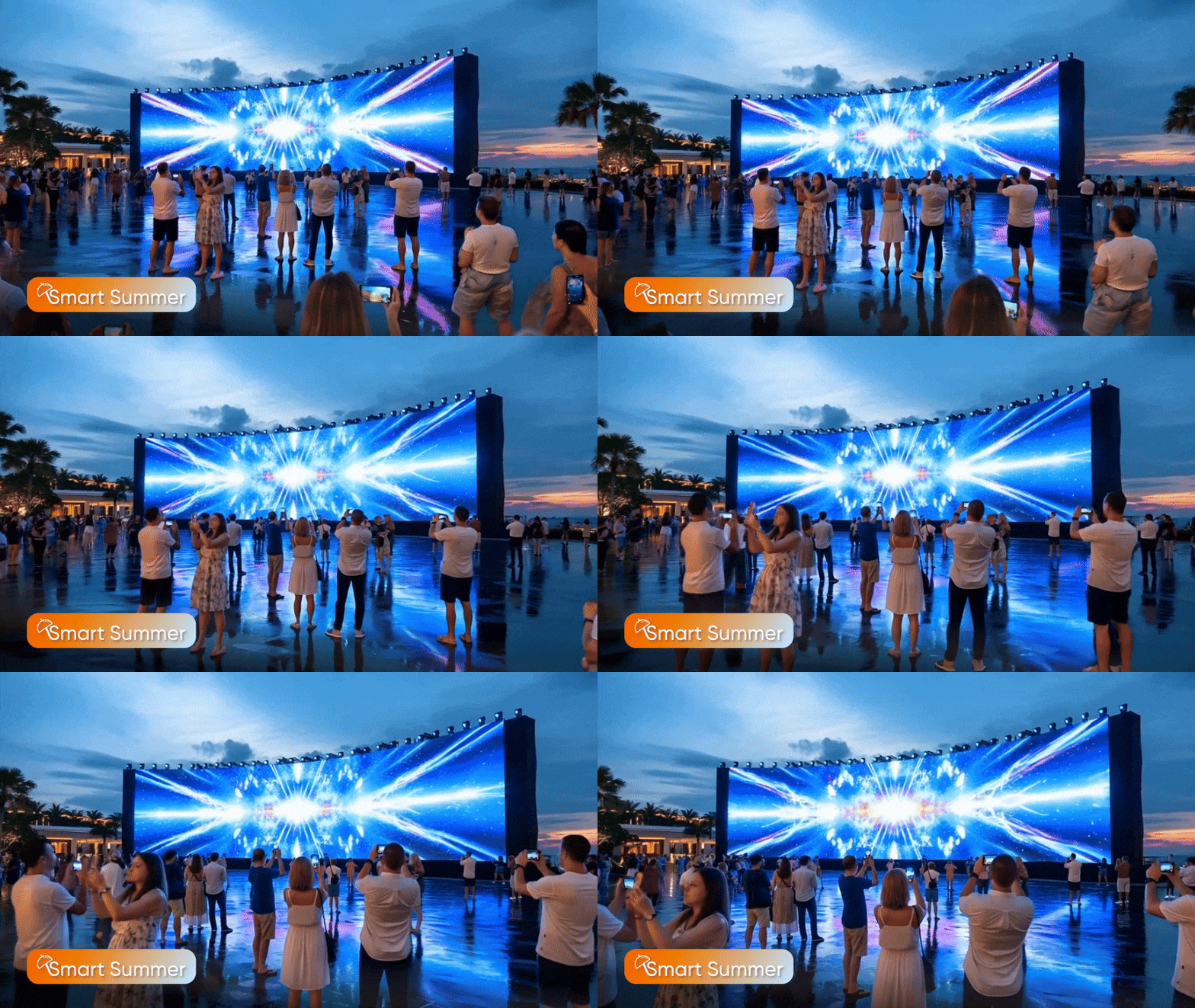
- Large format LED entrance displays
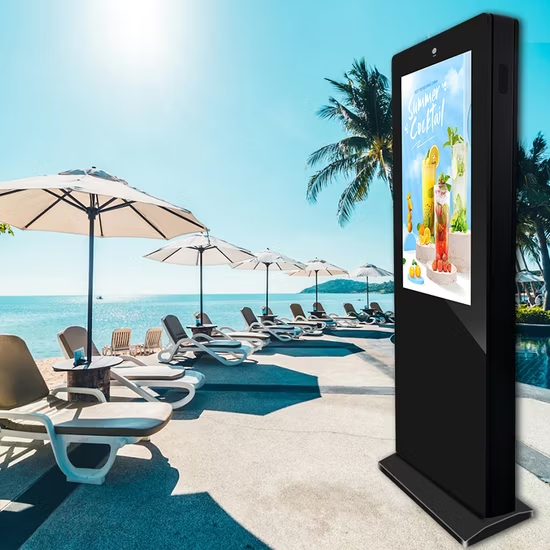
- Outdoor high brightness LCD screens
- Interactive way finding kiosks
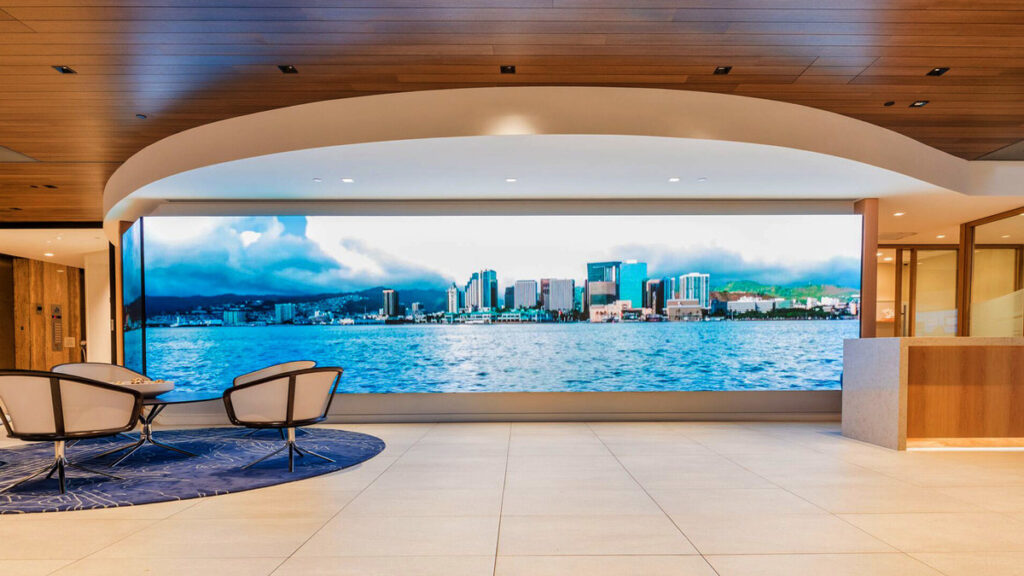
- Reception video walls
- Menu boards for food and beverage areas
- Queue time displays
- Event promotion screens
- Mobile digital totems
Organisations select formats based on viewing distance, environmental exposure and content purpose. For example, outdoor screens require higher brightness and weather protection. Meanwhile, interactive kiosks suit navigation heavy environments. Operators also consider foot traffic patterns, campaign goals and maintenance access before finalising deployment.
Where Tourism Digital Displays Are Used
Digital displays are used across a wide range of Tourism applications including:
- Resorts
- holiday parks
- ski centres
- coastal destinations
- theme parks
- museums
- heritage sites
- leisure centres
- spa retreats
- cruise terminals
- visitor information centres
- hotel lobbies
- water parks
- entertainment complexes.
Each environment uses digital signage differently. For example, theme parks focus on queue management and event promotion. Meanwhile, resorts prioritise activity schedules and upselling experiences. Leisure centres highlight class timetables and membership offers. Therefore, operators tailor content strategy to visitor flow, seasonality and service mix.
Business Impact, ROI and Measurable Outcomes
Digital signage for tourism applications influences both cost control and revenue growth.
Operationally, teams reduce print costs and minimise manual updates. Furthermore, staff spend less time answering routine questions. This improves efficiency during peak periods.
Commercially, operators promote time sensitive offers, events and upgrades. For example, resorts increase excursion bookings through targeted lobby displays. Similarly, leisure centres boost class attendance with real time availability screens.
Key performance indicators include secondary spend per visitor, dwell time in retail zones, booking conversion rates, queue reduction time and staff assistance requests.
Over time, operators analyse campaign performance and adjust messaging. Therefore, digital signage becomes a measurable revenue and efficiency tool rather than a simple display platform.
Wayfinding and Site Navigation
Large resorts and attractions often cover extensive areas. Therefore, clear navigation improves guest confidence and reduces frustration.
Teams deploy interactive maps and directional displays at entrances and junctions. As a result, visitors find amenities, attractions and services quickly. Staff then focus on higher value guest interactions instead of providing directions.
Event and Activity Promotion
Tourism venues host daily activities, performances and seasonal events. However, guests often miss opportunities without timely reminders.
Marketing teams schedule promotional content throughout the day. Consequently, visitors discover events while moving through key zones. This increases participation rates and drives additional revenue.
Queue Management and Capacity Updates
Peak periods create congestion. Therefore, operators display wait times and alternative options in real time.
Guests make informed choices, which balances foot traffic across the site. Meanwhile, management reduces perceived waiting time and improves satisfaction.
Upselling and Cross Promotion
Resorts and leisure centres rely on secondary spend. For instance, spa treatments, dining upgrades and merchandise contribute significant revenue.
Digital signage presents targeted offers near decision points such as reception areas and exits. Consequently, guests respond to relevant promotions at the right moment.
Key Considerations When Choosing This Solution
Environment fit remains critical. Operators must assess sunlight exposure, moisture levels and physical security risks.
Operational workflow also matters. Teams should align content control with marketing and operations departments. Therefore, organisations avoid bottlenecks and inconsistent updates.
Integration capability influences long term value. Managers should confirm compatibility with booking, ticketing and data systems.
Reliability and remote management protect uptime. In addition, scalable architecture supports expansion across new sites or seasonal pop up zones.
Finally, leaders must evaluate total cost of ownership, including maintenance, connectivity and content production.
How Organisations Use These Solutions Effectively
Successful operators define a clear content strategy first. They map visitor journeys and identify key decision points. Consequently, every screen serves a purpose.
Next, they assign governance roles. Marketing teams manage campaigns, while operations staff update live information. This separation improves accuracy and speed.
Organisations also measure performance regularly. They track revenue uplift, queue reduction and engagement metrics. Therefore, content evolves based on evidence rather than guesswork.
Common mistakes include overloading screens with text, ignoring seasonal adjustments and failing to train staff. However, disciplined management avoids these issues.
Why Choose MetroSpec's Digital Display Solutions
MetroSpec supports tourism, resort and leisure operators with application focused digital signage strategies. The team analyses operational goals, visitor flow and commercial priorities before recommending technology architecture.
Rather than focusing on hardware alone, MetroSpec aligns systems with measurable outcomes. As a result, organisations gain scalable, manageable and revenue focused deployments that support long term growth.
Frequently Asked Questions
How much does digital signage for tourism applications cost?
Costs vary based on screen type, integration depth and site scale. However, operators should evaluate total ownership cost rather than initial hardware price alone.
Is digital signage suitable for outdoor tourism environments?
Yes. Operators deploy high brightness and weather resistant displays specifically configured for outdoor conditions.
Can digital signage integrate with booking and ticketing systems?
Most modern platforms support integration. Therefore, teams display real time availability, pricing and event updates automatically.
How scalable are these systems for multi site resorts?
Cloud based management allows central control across multiple locations. As a result, organisations expand without rebuilding infrastructure.
Who manages the content day to day?
Typically, marketing teams handle promotions while operations update live information. Clear governance ensures consistency and speed.
Request a Digital Display Consultation
Digital signage for tourism applications delivers operational clarity, stronger guest engagement and measurable revenue growth. When organisations align technology with visitor journey strategy, they create flexible communication systems that adapt to seasonality and demand shifts.
Tourism leaders who plan carefully, integrate intelligently and measure performance consistently position their venues for sustained success. Contact us to discuss available solutions that will suit your venue.