Epaper Digital Signage Displays provide an energy-efficient and highly readable alternative to traditional digital signage and printed displays. Using reflective electronic ink (e-ink) technology, epaper displays reflect ambient light rather than emitting it, delivering excellent visibility in bright environments while consuming extremely low power.
MetroSpec’s Epaper Digital Signage Displays are designed for organisations seeking sustainable, low-maintenance signage solutions that can be remotely updated without the recurring costs of printing, installation, and replacement.
Read more about Epaper Digital Signage Displays
What Makes Epaper Digital Signage Different?
Our Epaper displays use reflective display technology rather than backlighting. Unlike LED or LCD screens, epaper displays reflect ambient light in a way that closely resembles printed paper, making them easy to read even in direct sunlight.
Power is only required when content changes. Once updated, the image remains visible without drawing energy, making epaper displays ideal for locations where power availability, sustainability, or operating costs are key considerations.
Why Choose MetroSpec’s Epaper Digital Signage Displays?
- Ultra-low power consumption, suitable for battery or solar-powered installations
- Excellent readability in high-glare and outdoor environments
- Remote content updates via networked connectivity
- Durable designs for public and commercial use
- Reduced total cost of ownership compared to printed signage
Typical Applications for Epaper Digital Signage
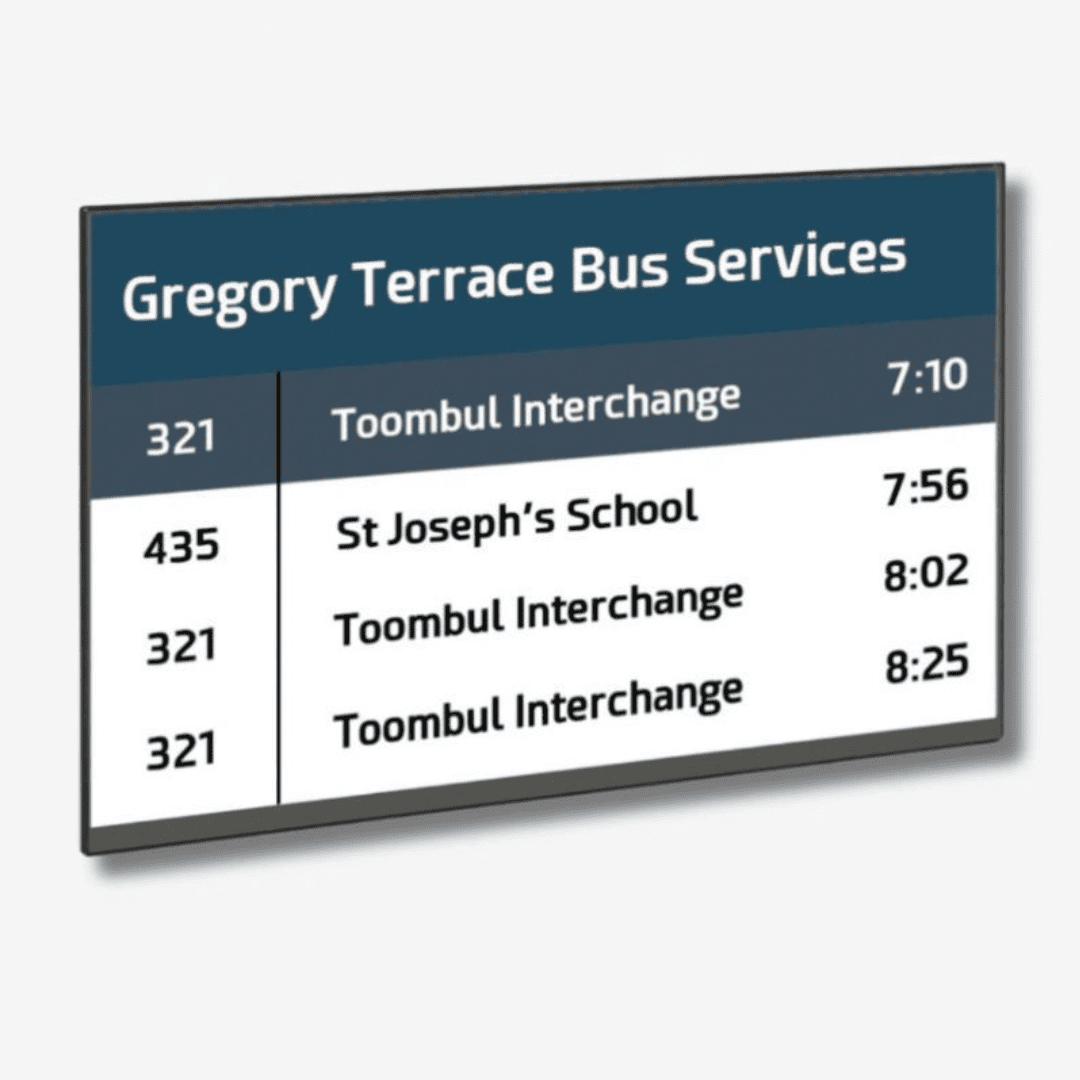
- Public transport timetables and passenger information displays
- Retail pricing, promotions, and shelf-edge signage
- Council and community notice boards
- Campus wayfinding and informational signage
- Corporate communications and facility signage
When Epaper Digital Signage May Not Be the Right Choice
Epaper digital signage is designed for static or periodically updated content. It may not be suitable for applications that require continuous motion video, fast refresh rates, or highly dynamic advertising content. In these cases, traditional LED or LCD digital signage solutions may be more appropriate.
Epaper Digital Signage vs LED and Printed Signage
Compared to LED or LCD digital signage, epaper displays prioritise energy efficiency and sunlight readability over motion and colour vibrancy. Unlike printed signage, epaper displays can be remotely updated, reducing ongoing printing, installation, and replacement costs while maintaining a familiar paper-like appearance.
How to Choose the Right Epaper Digital Signage Display
When selecting an epaper digital signage solution, consider the following factors:
- Display size and viewing distance
- Colour or monochrome display requirements
- Indoor versus outdoor installation environment
- How frequently content needs to be updated
- Available power sources, including battery or solar options
Frequently Asked Questions
What is an Epaper Digital Signage Display?
An epaper digital signage display uses electronic ink technology to present text and images that resemble printed paper. Unlike traditional digital signage, epaper displays only consume power when the content changes.
Are these Epaper Displays suitable for outdoor use?
Yes. Many epaper displays are designed for outdoor environments and remain readable in direct sunlight, making them ideal for public information signage and transport applications.
How is content updated?
Content can be updated remotely using a content management system (CMS) via Wi-Fi or cellular connectivity, allowing information to be changed without physical access to the display.
Do Epaper displays use less power than LED or LCD signage?
Yes. Epaper displays consume significantly less power because they only draw energy when the displayed content changes.
When should Epaper signage be used instead of traditional digital displays?
Epaper signage is best suited for applications where information changes periodically rather than continuously, where sunlight readability is important, or where power efficiency is a priority.