
Digital Signage for Hospitality
Hospitality digital display solutions that improve guest communication, streamline operations, and strengthen brand consistency across service-led environments
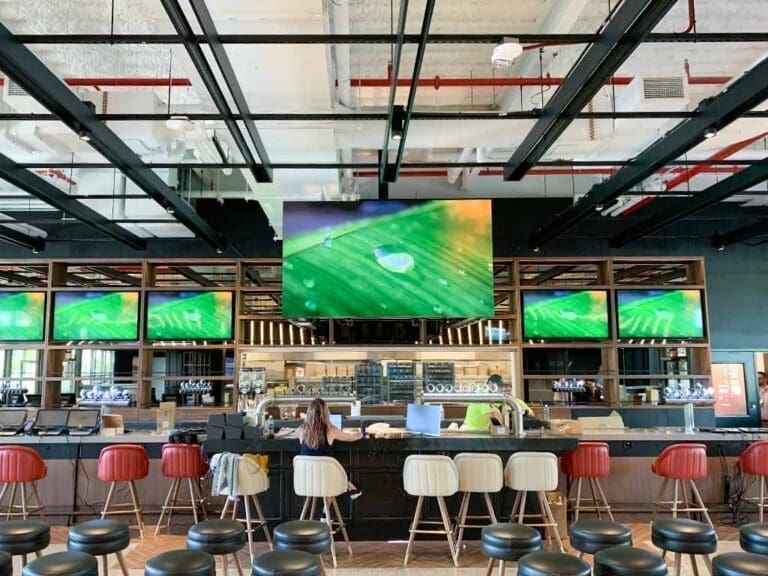
Display Solutions That Enhance the Guest Experience
Digital Signage for Hospitality combines commercial-grade screens, media players, and content management software to deliver real-time information across hotels, restaurants, bars, resorts, and entertainment venues. In this application, operators replace printed signage, static menus, and manual noticeboards with centrally controlled digital displays. As a result, teams update information instantly while maintaining visual consistency across every guest touchpoint.
Hospitality businesses rely on timely communication to deliver smooth service and positive guest experiences. However, printed materials create delays, increase labour, and introduce inconsistency across locations. Therefore, hospitality digital display solutions give managers direct control over menus, event information, wayfinding, and promotions. This approach supports daily operations, reduces repetitive staff tasks, and improves how guests interact with the venue.
Digital Display Solutions That Improve Measurable Business Outcomes
Hospitality venues manage constant change. Menus shift based on availability, events require updated schedules, and promotions vary by season or time of day. When teams rely on printed materials, updates consume staff time and often create inconsistencies between outlets. As a result, guests receive mixed messages and staff must correct outdated information.
Hospitality digital display solutions remove these inefficiencies by giving managers central control over content. Teams schedule updates in advance, deploy changes instantly, and standardise branding across every location. Therefore, venues reduce printing costs, improve operational accuracy, and respond faster to service changes. In addition, digital systems create structured communication channels that reduce confusion and improve guest confidence.
What Problems Digital Displays Solve for the Hospitality Industry
Hospitality operators adopt hospitality digital display solutions not only to modernise signage, but also to improve measurable business outcomes. Because service environments rely on speed and clarity, digital displays reduce front desk interruptions, shorten decision time at ordering points, and limit errors caused by outdated information. As a result, staff allocate more time to service delivery instead of repetitive explanations.
In addition, hospitality digital display solutions support revenue generation. Operators highlight high margin items, promote time sensitive offers, and align campaigns with occupancy levels or event schedules. Therefore, venues can influence guest behaviour at key decision points while maintaining brand consistency across every location.
Technologies Used in This Application
Commercial-Grade Display Screens
Operators select indoor and outdoor LCD or LED commercial displays based on brightness, viewing distance, and operating hours. High-brightness screens support areas with strong ambient light, while standard indoor displays suit restaurants and lounges. Therefore, selecting the correct specification ensures visibility and longevity.
Digital Signage Media Players
Media players process and deliver visual content to each screen. Teams configure playback schedules and content zones to match the environment. Because hospitality venues often operate long hours, reliable playback hardware remains critical to consistent communication.
Content Management Software
Content management systems allow managers to control messaging across one or multiple venues from a central dashboard. Teams schedule campaigns, approve content, and monitor performance. As a result, hospitality groups maintain brand consistency while reducing manual workload.
Network Connectivity and Monitoring
Reliable connectivity ensures displays remain operational. Monitoring tools alert teams when screens go offline, which allows rapid resolution. Therefore, venues protect guest facing communication from unnecessary downtime.
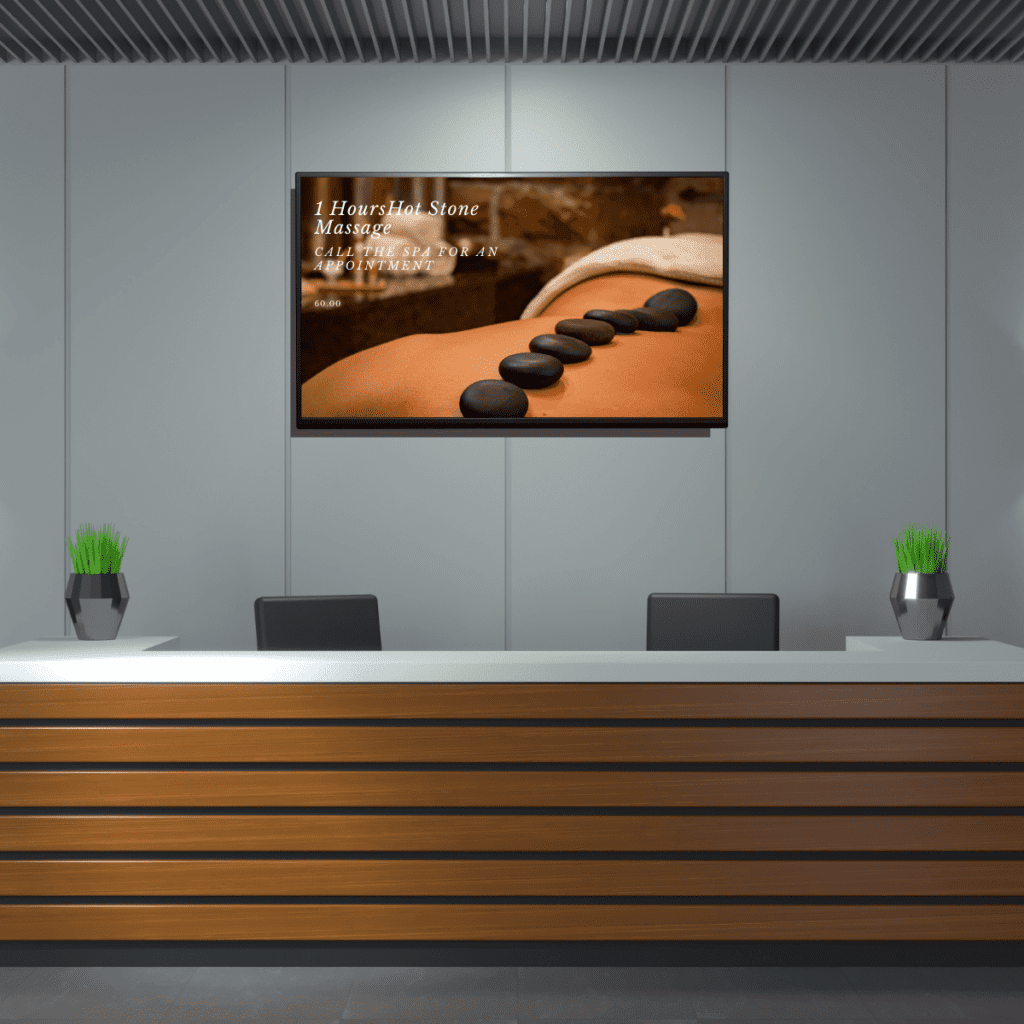
Where To Use Digital Signage for Hospitality
Digital Signage for Hospitality solutions are perfect for:
- Hotel lobbies
- reception desks
- concierge areas
- restaurant, cafés, and bars,
- quick-service counters
- conference centres
- event spaces
- guest corridors, lifts, spas, gyms, and resort facilities,
- outdoor hospitality zones
- entertainment venues
- back-of-house staff areas
Operators deploy hospitality digital display solutions across these environments to deliver location-specific messaging. For example, lobby screens welcome guests and highlight amenities, while restaurant displays present dynamic menus and pricing. Meanwhile, back-of-house screens communicate rosters and operational updates. Consequently, information reaches the right audience without creating visual clutter or operational friction
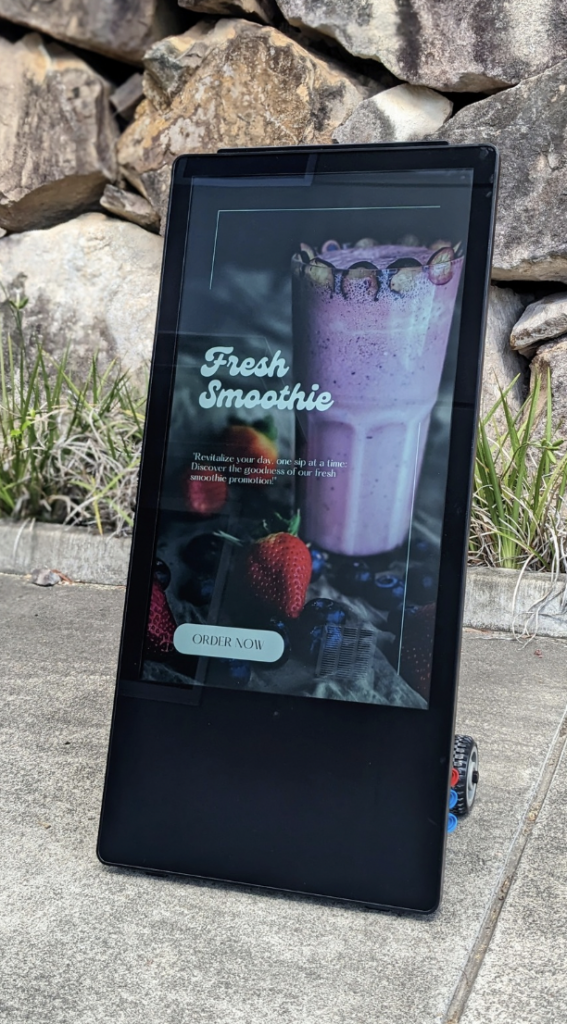
Business Impact, ROI and Measurable Outcomes in Hospitality
Digital Signage for Hospitality solutions directly influence operational efficiency, revenue performance, and guest experience outcomes. Because hospitality venues manage constant information changes, digital systems reduce the time staff spend updating printed materials and correcting outdated messaging. As a result, teams focus more on service delivery and guest interaction rather than administrative tasks.
Cost control improves immediately. Operators eliminate recurring printing expenses, centralise content updates, and reduce the labour required to replace physical materials across multiple outlets or properties. Consequently, marketing and operations teams gain greater control while lowering ongoing communication costs.
Revenue performance also strengthens. Managers use digital displays to highlight premium menu items, promote time-sensitive offers, and align campaigns with occupancy levels or event schedules. Because messaging can be scheduled by location and time, venues influence guest decisions at critical moments. Therefore, hospitality businesses improve upsell visibility without increasing staffing levels.
Guest experience metrics benefit as well. Clearer wayfinding reduces confusion in large venues, accurate menu displays reduce ordering errors, and consistent messaging strengthens brand perception. In addition, real-time updates ensure guests receive reliable information, which reinforces trust and service confidence.
Importantly, hospitality digital display solutions support measurable performance tracking. Managers can monitor campaign timing, adjust promotional visibility, and evaluate indicators such as reduced enquiry volume, improved order accuracy, increased promotion engagement, or smoother event navigation. Consequently, digital signage becomes a managed operational asset rather than a static installation.
When operators align content strategy with operational objectives, hospitality digital display solutions deliver measurable improvements in efficiency, clarity, and revenue contribution. As a result, the technology supports both immediate service performance and long-term business scalability.
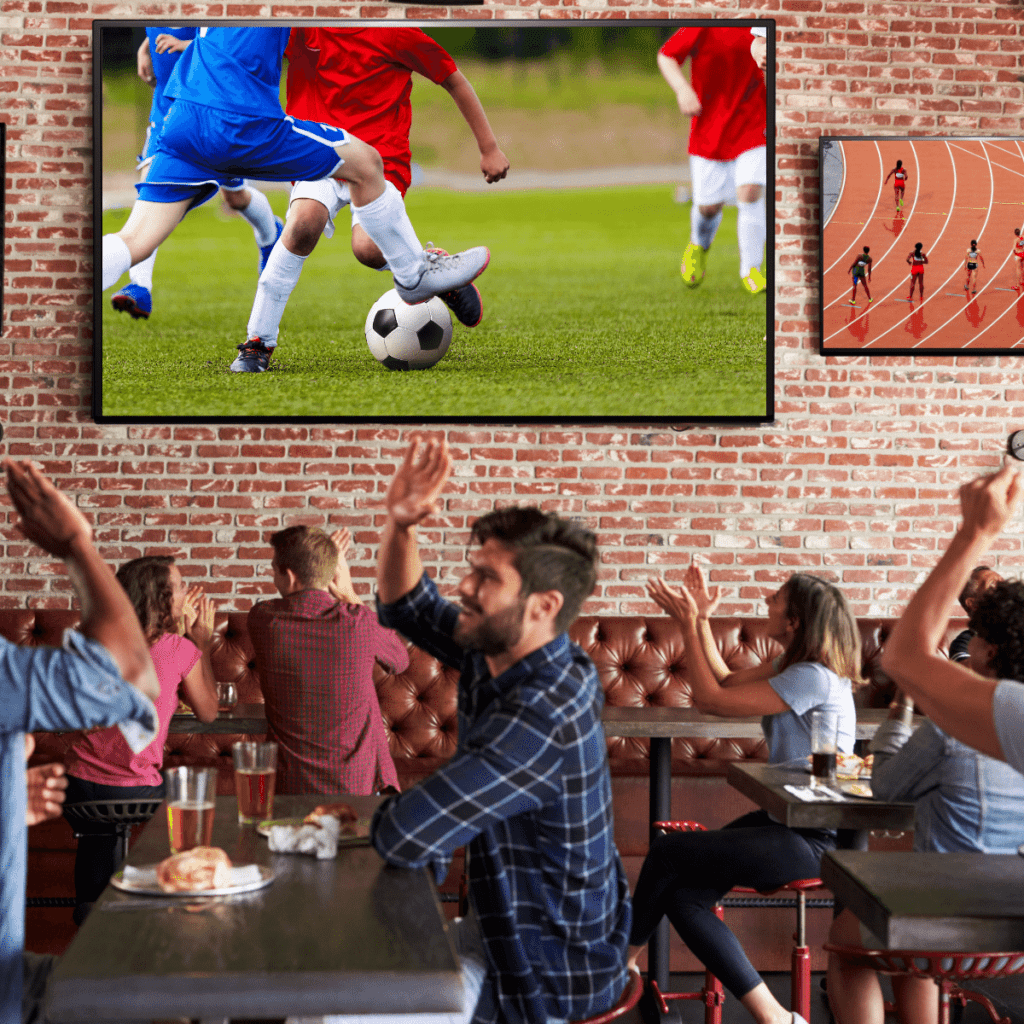
Digital Menu Boards in Restaurants and Bars
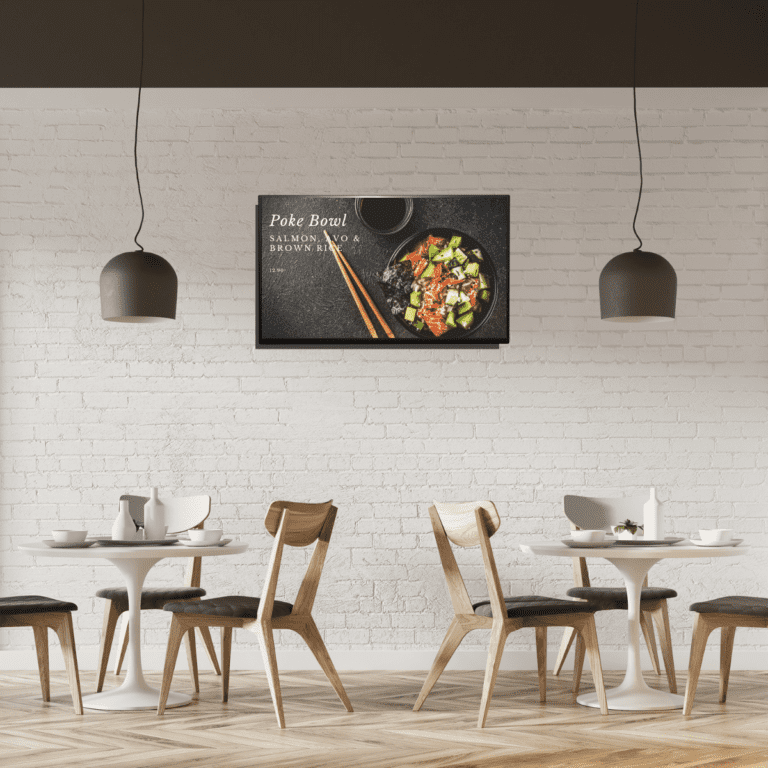
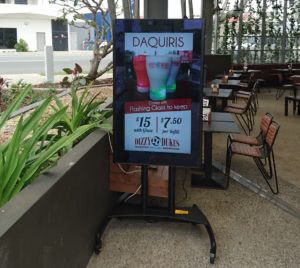
Restaurants and bars use hospitality digital display solutions when menus change frequently or vary by time of day. Operators adjust pricing, availability, and promotions in real time instead of reprinting materials. As a result, staff spend less time explaining menu discrepancies and more time serving guests. In addition, dynamic visuals draw attention to high-margin items, which supports revenue growth.
Lobby and Reception Information Displays
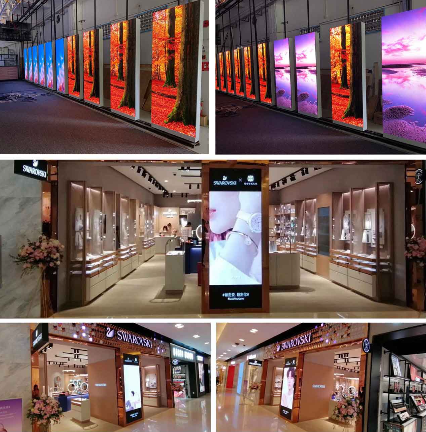
Hotels deploy lobby displays to welcome guests, communicate check-in details, and highlight amenities or local attractions. Because managers update content centrally, information remains consistent across multiple properties. Consequently, front-desk staff handle fewer repetitive questions and guests move through check-in more efficiently.
Wayfinding and Event Navigation
Large hotels and conference venues rely on digital displays to guide guests to meeting rooms, ballrooms, or facilities. Teams update directional content based on daily event schedules, which reduces confusion during busy periods. Therefore, guests navigate spaces independently while staff focus on service delivery.
Promotions and In-Venue Upselling
Hospitality operators use digital screens to promote dining specials, spa services, ticketed events, and seasonal packages. Managers schedule campaigns by time, location, or audience type. As a result, promotions align with availability and guest flow. This structured approach increases visibility for revenue-generating services without disrupting operations.
Back-of-House Staff Communication
Managers install back-of-house displays to share rosters, safety notices, and operational announcements. Instead of relying on printed memos or verbal briefings, teams access consistent updates in real time. Consequently, internal communication improves and operational errors decrease.
Key Considerations When Choosing This Solution
Hospitality operators should evaluate screen brightness, placement, and viewing distance to match each environment. In addition, they should assess how easily staff can update content without technical expertise.
Decision-makers must also consider system scalability. Multi-site groups require central control across properties, while single venues may prioritise simplicity. Furthermore, integration with POS, booking, or event systems can streamline workflows.
Finally, long term reliability and support matter. Hospitality venues operate extended hours; therefore, hardware durability and responsive support services directly affect service continuity.
Strengthen Scalability
Scalability should extend beyond hardware expansion. Multi-site hospitality groups require central content control, user permission management, and consistent branding standards across properties. Therefore, decision-makers should evaluate whether the platform supports structured growth without increasing administrative complexity.
How Organisations Use These Solutions Effectively
Successful hospitality organisations treat digital display networks as operational infrastructure rather than decorative screens. Therefore, they begin with a communication framework that maps messaging to the guest journey — arrival, ordering, navigation, event participation, and departure.
First, managers define content priorities for each zone. Lobby screens focus on orientation and amenities, while restaurant displays highlight menu clarity and upsell opportunities. Meanwhile, back-of-house screens support internal coordination. As a result, each display serves a defined operational purpose.
Second, organisations establish governance processes. Teams assign responsibility for content updates, approval workflows, and scheduling. Because hospitality environments change daily, structured governance prevents outdated or conflicting information from appearing across venues.
Third, leading operators measure performance. They review indicators such as reduced enquiry volume, improved order accuracy, increased promotion visibility, and smoother event navigation. Consequently, hospitality digital display solutions become part of continuous operational improvement rather than static installations.
Why Choose MetroSpec's Hospitality Digital Display Solutions
MetroSpec digital signage for hospitality solutions align with real-world operational demands. Metrospec focuses on environment suitability, system reliability, and long-term scalability rather than isolated products. As a result, hospitality operators receive solutions tailored to their venue layout, operating hours, and content workflows.
MetroSpec supports projects from specification through deployment and ongoing system support. Therefore, clients maintain stable, manageable display networks that adapt as their hospitality operations evolve.
Recent Projects
Frequently Asked Questions
How much do hospitality digital display solutions cost?
Costs vary based on screen size, quantity, software requirements, and installation complexity. Smaller single-venue systems require lower investment, while multi-site deployments require greater infrastructure and central management capability.
Are hospitality digital display solutions suitable for small venues?
Yes. Operators can deploy compact systems for cafés or boutique hotels, while larger groups can scale across multiple properties. Therefore, solution design should match operational size and growth plans.
Can these systems integrate with existing hospitality platforms?
Many systems integrate with POS, booking, or event management platforms. Integration reduces manual data entry and ensures content reflects real-time operational information.
How scalable are hospitality digital display networks?
Operators can expand networks by adding screens or locations to the same management platform. Consequently, hospitality groups can grow without redesigning the entire system.
Who manages ongoing content updates?
Venue managers or marketing teams typically manage updates through a central dashboard. With structured workflows in place, teams maintain control without requiring advanced technical skills.
Request a Digital Display Consultation
Hospitality digital display solutions provide structured, adaptable communication systems that support service efficiency, guest clarity, and revenue performance. When operators align technology with workflow and content strategy, digital displays become long-term operational assets rather than visual accessories. To explore suitable configurations or evaluate implementation approaches, organisations can review related technologies or consult with MetroSpec for application-specific guidance.