
Digital Signage for Public Transport
Real Time Passenger Communication Infrastructure for Modern Transport Networks
Introduction to Digital Signage for Public Transport
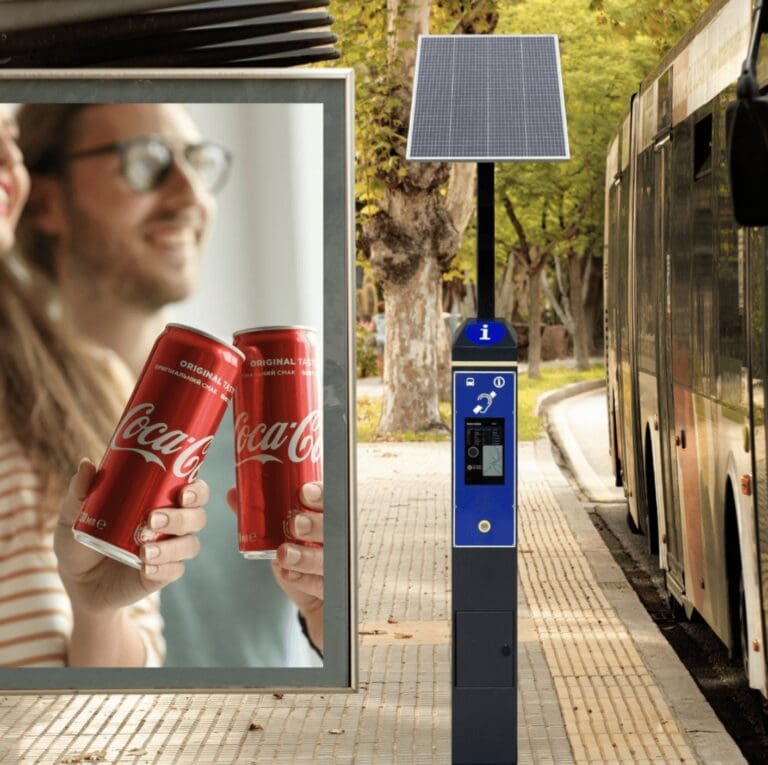
Digital signage for public transport gives operators real time control over passenger information across stations, platforms, terminals and vehicles. Instead of relying on static boards or manual announcements, transport authorities deliver dynamic updates through networked displays. You can read more about this, here.
Public transport environments operate under constant time pressure. For example, schedules change, delays occur and passenger volumes fluctuate. Therefore, operators need communication systems that respond instantly and also scale across multiple locations.
Transport authorities, rail operators, bus networks, airport transit systems and metropolitan infrastructure managers use digital signage to improve passenger flow, increase safety and also support advertising revenue. Additionally, digital displays help reduce congestion, limit confusion and also strengthen service reliability.
As a result, digital signage supports operational control while improving the overall passenger experience. Read more, here.
What Problems Our Digital Displays Solve in Retail
Retail environments face constant challenges such as capturing attention in crowded spaces, communicating frequently changing promotions, and maintaining consistent branding across locations. Digital display systems address these challenges by enabling:
- Rapid content updates without printing costs
- Centralised control across multiple stores
- Consistent brand messaging
- Real-time promotional and pricing updates
- Improved customer engagement and dwell time
By replacing static signage with retail signage technology, retailers also gain flexibility, visibility, and operational efficiency.
Technologies Used in This Application
Teams deploy high brightness LCD panels and LED displays designed for 24 hour operation. Additionally, engineers also select vandal resistant enclosures suitable for public environments. In fact, you can read more about a real world application for Queensland Rail, here.
Operators also integrate signage platforms with real time passenger information systems, GPS tracking feeds and central control software. As a result, displays update automatically as schedules change.
Network teams also establish secure, redundant connectivity across stations and vehicles. Therefore, operators maintain uptime even during peak usage, as a result.
Furthermore, organisations also implement remote monitoring tools that track hardware status and content delivery. Finally, control centres maintain override capability for emergency messaging across the entire network.
Typical Deployment Formats in Digital Signage for Public Transport Environments
Typical digital signage solutions for public transport environments include:
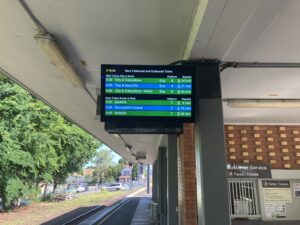
• Platform mounted arrival boards
• Large LED concourse displays
• Ticket hall information screens
• Bus bay allocation displays
• Onboard passenger information screens
• Car park guidance displays
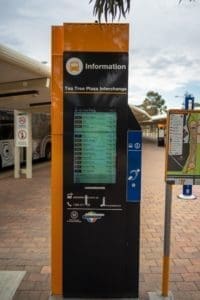
• Interactive journey planning kiosks
• Overhead corridor directional displays
• Exterior station forecourt screens
Organisations select formats based on viewing distance, ambient light as well as passenger density. For example, outdoor platforms require high brightness and weather protection. Meanwhile, onboard displays prioritise compact design and vibration resistance. Operators also consider mounting constraints, power access as well as maintenance schedules before deployment.
Where Digital Signage for Public Transport Are Used
Digital displays are used across a wide range of locations in public transport, including:
- train stations
- underground platforms
- bus terminals
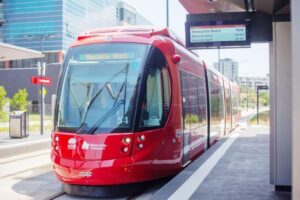
- tram stops
- ferry terminals
- airport transit corridors
- ticket halls
- platform entrances
- car parks
- pedestrian tunnels
- interchange hubs
- onboard vehicle
Usage varies by environment. For example, underground platforms prioritise real time arrival information as well as emergency messaging. Meanwhile, bus terminals focus on bay allocation and departure updates. Similarly, airport transit corridors emphasise way finding and multilingual messaging. As a result, operators tailor deployment based on passenger density, dwell time as well as infrastructure layout.
Business Impact, ROI and Measurable Outcomes
Digital signage for public transport delivers measurable, operational and also commercial value.
Operationally, transport authorities reduce reliance on manual updates and printed schedules. Furthermore, staff spend less time answering routine enquiries.
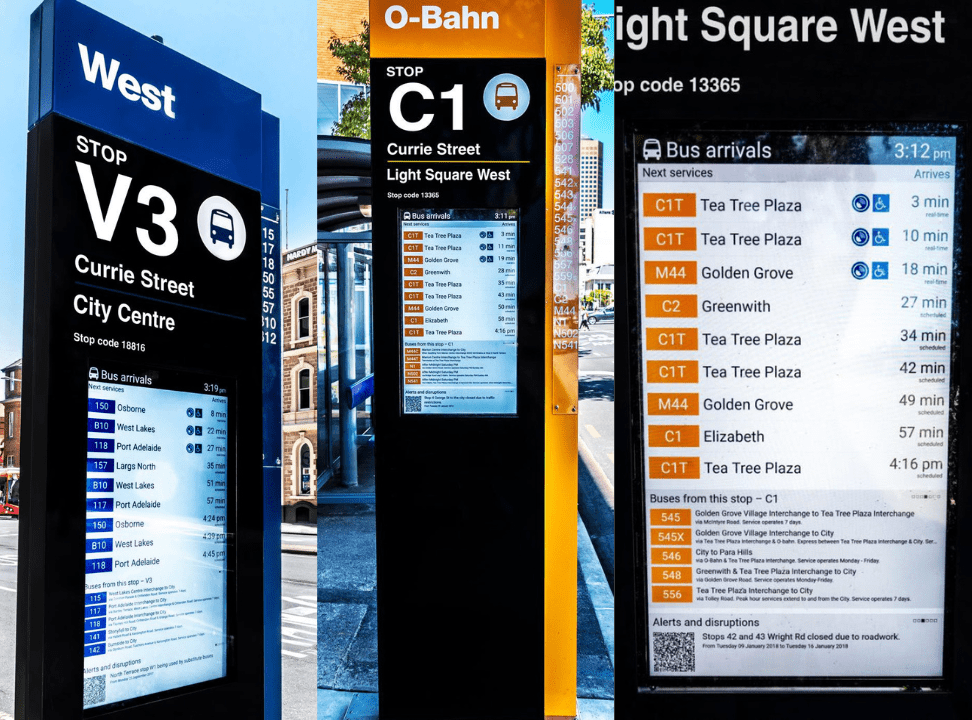
Passenger flow also improves when operators display accurate arrival times and platform information. Therefore, dwell time on platforms decreases and congestion reduces. Read more about this, here.
Additionally, commercial operators monetise screen networks through advertising inventory. Transit advertising generates incremental revenue without increasing fares.
Key performance indicators for public transport digital displays include on time communication accuracy, passenger satisfaction scores, queue reduction time, incident response speed, advertising fill rate and revenue per display.
As a result of digital display installation, centralised control improves service consistency over time across the network.
Real Time Arrival and Departure Displays
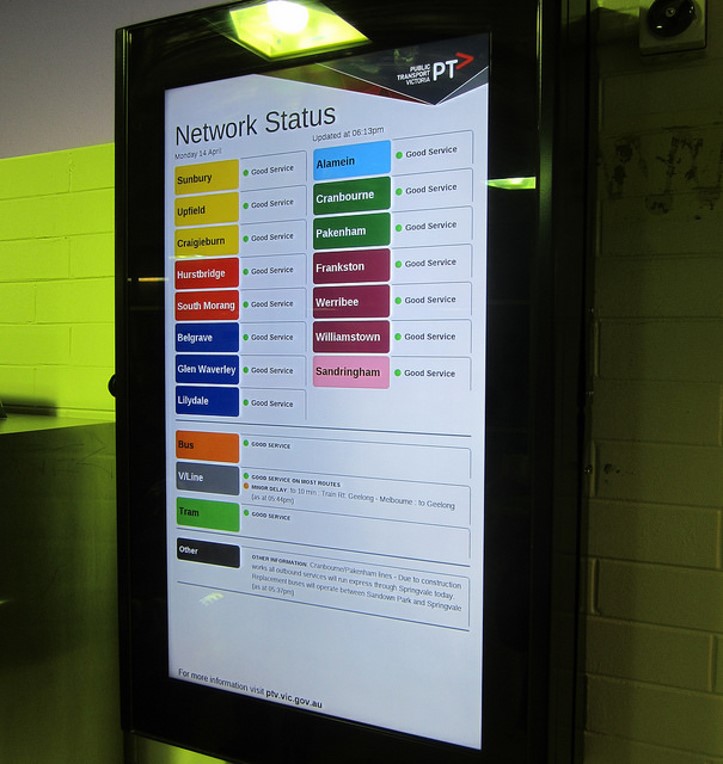
Passengers rely on accurate scheduling information. In response, operations teams integrate digital signage with live tracking systems to display arrival times and service updates.
As a result, passengers can plan movements confidently and reduce unnecessary crowding near platform edges.
Platform Change and Disruption Messaging
Unexpected changes create confusion quickly. Control centres update displays instantly across affected stations.
Consequently, passengers redirect efficiently and safety improves during peak congestion.
Wayfinding and Interchange Guidance
Large interchange hubs require clear navigation. Digital signage guides with way finding capabilities make it easy for passengers to move between connecting services, exits and facilities.
Therefore, travellers move between services faster and reduce missed connections.
Onboard Passenger Information
Transport operators install displays inside buses, trams and trains. These screens announce upcoming stops, service alerts and route maps. Furthermore, add-ons for inclusive accessibility such as hearing loops and digital information points, make it possible for people of all abilities to access the most up to date travel information quickly and easily. Read more about that, here.
Passengers remain informed throughout the journey, which improves overall service perception.
Transit Advertising and Revenue Generation
Transport hubs attract high daily foot traffic. Operators schedule advertising campaigns between passenger information segments.
Consequently, networks generate measurable advertising revenue while maintaining service communication priority.
Key Considerations When Choosing This Solution
Environmental durability remains essential. Public transport infrastructure exposes displays to weather, vibration and high foot traffic.
System integration capability determines long term performance. Operators must align signage with tracking systems and scheduling databases.
Content governance influences clarity. Passenger information must take priority over advertising during disruptions.
Reliability and redundancy protect safety. Therefore, transport authorities invest in backup power and failover systems.
Scalability also matters. Networks often expand or modernise, so architecture must support phased deployment across multiple stations.
How Organisations Use These Solutions Effectively
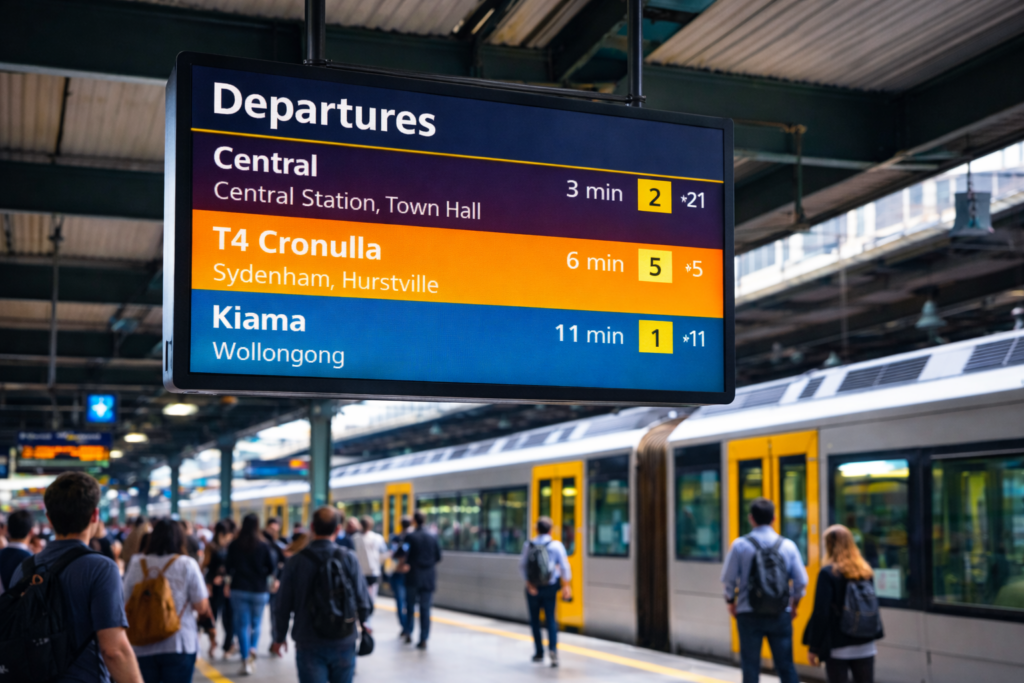
Successful transport operators define clear content hierarchies. Real time service information remains primary, while advertising rotates around operational messaging.
They also centralise control within network operations centres. This ensures consistent updates and rapid response during incidents.
Operators measure performance through passenger feedback, dwell time analysis and system uptime reporting. Therefore, they refine placement and brightness calibration over time.
Common mistakes include overcrowded screen layouts, delayed integration with live data feeds and insufficient maintenance planning. However, structured governance avoids these risks.
Why Choose MetroSpec's Digital Display Solutions
MetroSpec supports transport authorities and infrastructure operators with application focused digital signage strategies aligned to safety, efficiency and revenue objectives.
The team evaluates site conditions, integration requirements and operational workflows before recommending system architecture. As a result, organisations deploy scalable, reliable networks that improve passenger communication and maximise long term value. You can also read more about how Metrospec stands out in the digital signage industry here.
Recent Projects
Frequently Asked Questions
How much does digital signage for public transport cost?
Costs vary based on screen type, integration depth and network scale. However, operators should assess lifetime operational savings and advertising revenue potential alongside hardware investment.
Can digital signage integrate with live tracking systems?
Yes. Modern platforms integrate with GPS tracking and scheduling databases to provide real time updates automatically.
Is digital signage suitable for outdoor transport environments?
Yes. Operators deploy weather resistant, high brightness displays engineered for public infrastructure.
How scalable are these systems across large transport networks?
Cloud based or centrally managed systems allow expansion across multiple stations and vehicles while maintaining unified control.
Who manages content and emergency messaging?
Typically, a central operations team controls passenger information and maintains override capability for safety alerts.
Request a Digital Display Consultation
Digital signage for public transport transforms static infrastructure into responsive communication networks.
When operators integrate real time data, prioritise passenger clarity and maintain reliable infrastructure, they improve service perception and operational efficiency.
With structured planning and measurable performance tracking, transport authorities build scalable digital communication systems that support both safety and revenue growth.