
Digital Displays for Advertising Applications
Strategic Communication Infrastructure for High Impact Brand Promotion

Introduction to Digital Displays for Advertising Applications
Digital displays for advertising give organisations dynamic control over campaign delivery across physical environments. Instead of relying on static billboards or printed posters, media owners and brands deliver scheduled, data driven content through networked screens.
Advertising environments move quickly. For example, campaigns rotate, audiences shift by time of day and performance expectations increase. Therefore, advertisers need platforms that support rapid updates, measurable impressions and consistent brand presentation.
Media network operators, retail landlords, transport authorities, venue owners and brand marketing teams also use digital displays to monetise space and increase campaign effectiveness. At the same time, they also aim to maximise occupancy rates, improve advertiser retention and also deliver measurable return.
Digital displays support these commercial goals by transforming physical locations into programmable media assets.
What Problems Digital Displays Solve for Advertising
Traditional advertising formats limit flexibility and measurement. Printed billboards lock in creative for fixed periods. As a result, advertisers cannot adjust campaigns based on performance or timing.
First, static media reduces revenue agility. Media owners cannot rotate multiple advertisers through one location efficiently.
Second, campaign measurement remains vague. Without digital tracking, operators struggle to prove impression delivery.
Third, inconsistent brightness or outdated hardware weakens brand impact.
Digital displays solve these challenges. Operators schedule multiple campaigns per screen, adjust content in real time and integrate audience data feeds. Consequently, media networks increase yield per location while improving advertiser confidence.
Digital Display Solutions that Deliver Promotional Content
Traditional advertising formats are static, slow to update, and difficult to measure. As a result, campaigns often lack relevance, consistency, and flexibility. Additionally, manual content changes increase operational cost and introduce errors across multi-location networks.
Advertising digital display solutions address these challenges by enabling centralised content control, scheduled playback, and remote updates. Therefore, advertisers can deploy campaigns faster, adjust messaging based on performance, and also ensure brand consistency across locations. In addition, digital displays support proof-of-play reporting and system monitoring, which improves accountability and campaign confidence as a result.
Digital Display Technologies Used In Advertising
Teams deploy high brightness LED displays for outdoor roadside environments and large format LCD panels for indoor placements. In addition, engineers specify brightness levels based on sunlight exposure and viewing distance.
Operators configure content management platforms that enable remote scheduling, proof of play reporting and multi advertiser rotation. Therefore, sales teams manage inventory efficiently.
Organisations integrate advertising servers and programmatic buying platforms with signage networks. As a result, campaigns adjust dynamically based on time, weather or audience data.
Network teams establish secure connectivity and redundancy to maintain uptime. Furthermore, operators implement remote monitoring to detect faults quickly and protect revenue continuity.
Typical Deployment Formats in Digital Displays for Advertising Environments
Typical Digital Displays used in advertising include:
- Large format roadside LED billboards
- Urban street pole displays
- Shopping centre digital panels
- Transport shelter displays
- Window facing retail screens
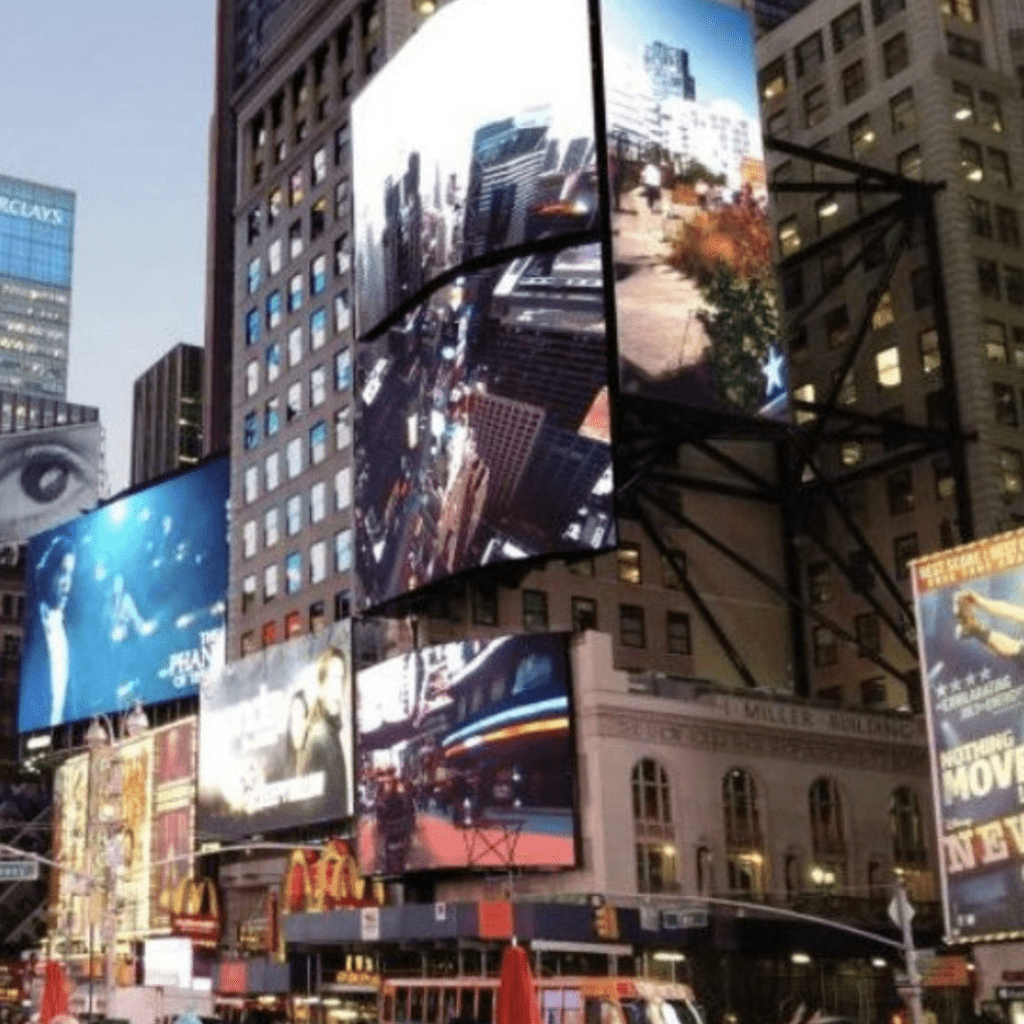
- Large LED building facades
- Elevator lobby advertising screens
- Fuel station forecourt displays
- Freestanding digital advertising totems
Organisations select formats based on traffic speed, viewing distance as well as environmental exposure. For example, roadside installations require high brightness and structural durability. Meanwhile, indoor retail displays prioritise resolution as well as proximity clarity. Additionally, operators also consider maintenance access, power availability and campaign objectives before deployment.
Where To Use Digital Displays for Advertising
Digital Displays for advertising are commonly used in
- Shopping centres
- retail storefronts
- roadside locations
- transport hubs
- airports
- petrol stations
- commercial buildings
- hospitality venues
- stadiums, cinemas
- corporate campuses
- urban public spaces
Usage varies by environment. For example, roadside displays focus on high brightness and long distance visibility. Meanwhile, retail locations prioritise proximity messaging and impulse influence. Transport hubs also emphasise dwell time engagement. Therefore, operators align content strategy with traffic speed, audience behaviour and exposure duration.
Business Impact, ROI and Measurable Outcomes
Digital displays for advertising drive both revenue growth and operational efficiency.
Media owners increase revenue by selling multiple time slots per screen. Furthermore, they optimise pricing based on time of day, event schedules and audience density.
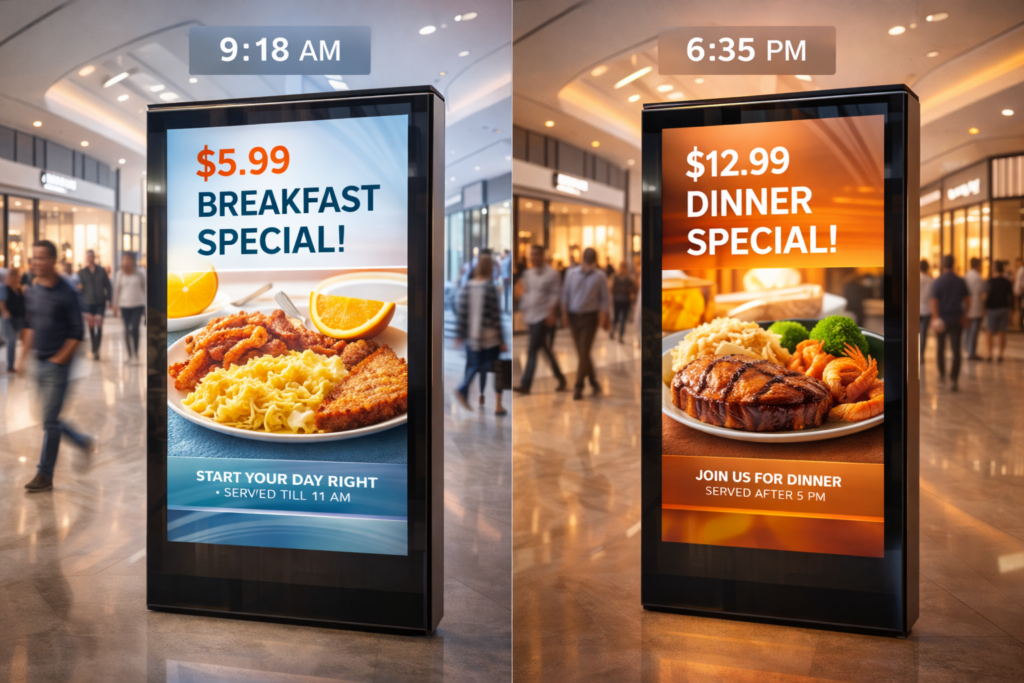
Advertisers benefit from dynamic content changes. For example, brands promote breakfast offers in the morning and dinner promotions later in the day. Therefore, messaging aligns with consumer intent.
Key performance indicators include fill rate, revenue per screen, cost per thousand impressions, dwell time, engagement rate and also campaign recall.
Operators also reduce print production costs and eliminate manual poster replacement. As a result, data driven scheduling strengthens advertiser retention and long term contract value over time.

Roadside Digital Billboards
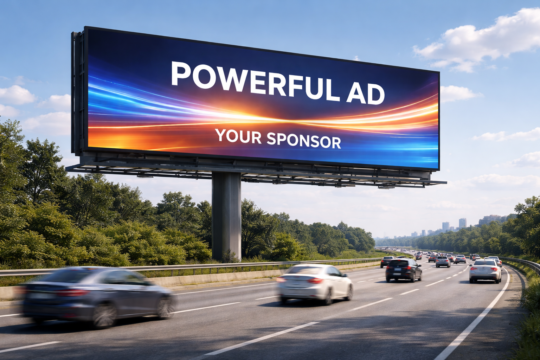
High traffic roads generate large impression volumes. As a result, operators deploy high brightness LED displays to maintain visibility in direct sunlight. In fact, you can read a real-world application story here.
Advertisers rotate campaigns based on schedule as well as target audience. Consequently, media owners maximise revenue from a single structure while also delivering strong brand exposure.
Retail Proximity Advertising
Retail storefronts and shopping centres attract audiences ready to purchase. As a result, advertisers deliver time sensitive promotions as well as impulse offers.
Operators are also able to update creative instantly to reflect stock levels or seasonal campaigns. Therefore, influencing brand purchasing decisions at the point of consideration as a result.
Transport Hub Advertising
Airports and train stations create extended dwell time. To maximise on this, advertisers use motion graphics as well as storytelling formats to increase engagement.
Meanwhile, media networks schedule campaigns aligned with peak passenger periods. As a result, advertisers reach defined demographic segments effectively. For example this case study, explores the benefits of implementing smart public transport signage at transports hubs.
Corporate and Office Tower Displays
Office environments attract business professionals. As a result, advertisers position displays in lobbies and lift areas to reach a consistent weekday audience.
Advertisers also align campaigns with business services, technology or financial products. Therefore, networks are able to tailor inventory to audience profiles. You can read more about this here.
Key Considerations When Choosing a Digital Display Solution for Advertising
Location suitability drives performance. Operators must assess traffic volume, dwell time and audience profile before installation.
Brightness and resolution must match viewing distance and environmental lighting. Therefore, engineering teams calculate specifications precisely.
Content governance also matters. Sales teams require scheduling flexibility while maintaining advertiser separation and compliance.
Integration capability influences long term scalability. Programmatic compatibility enables automated inventory sales and data driven pricing.
Reliability remains critical. Downtime directly reduces revenue, so operators prioritise monitoring systems and maintenance planning.
Finally, total cost of ownership includes energy usage, structural engineering and content production.
How Organisations Use These Solutions Effectively
Successful media networks begin with inventory strategy. They analyse traffic data, audience demographics and competitive placements. Consequently, they select high value locations.
Sales teams structure rate cards based on time slots and impression estimates. Meanwhile, operations teams maintain strict uptime standards.
Advertisers design content specifically for digital environments rather than repurposing static creative. This approach improves motion impact and readability.
Operators track campaign performance using proof of play data and audience measurement tools. Therefore, they refine pricing and scheduling continuously.
Common mistakes include overcrowded playlists, poor brightness calibration and weak content design. However, disciplined governance prevents these issues.
Why Choose MetroSpec's Digital Display Solutions
MetroSpec supports advertising network operators and property owners with application focused digital display strategies aligned to revenue objectives.
The team evaluates site conditions, structural requirements and content workflows before recommending system architecture. As a result, organisations deploy scalable advertising networks that maximise yield, maintain uptime and deliver measurable campaign performance.
Frequently Asked Questions
How much do advertising digital display solutions cost?
Costs vary based on screen size, brightness, technology type, and network scale. Smaller indoor systems cost less, while large outdoor LED installations require higher investment due to hardware and infrastructure requirements.
Are advertising digital displays suitable for outdoor use?
Yes, provided outdoor-rated displays with appropriate brightness, weather protection, and thermal management are used. These specifications are essential for long-term reliability.
Is it possible to update advertising content remotely?
Yes. Most advertising digital display solutions use centralised content management systems that allow remote updates, scheduling, and monitoring.
Do these solutions support multiple advertisers?
Yes. Advertising digital display solutions can rotate content from multiple advertisers, making them suitable for media owners and shared advertising environments.
How scalable are advertising digital display networks?
They are highly scalable. You can also add additional displays to the network over time, if the CMS and infrastructure support growth.
Request a Digital Display Consultation
Digital displays for advertising transform physical locations into programmable, measurable media assets.
When operators combine strong location strategy, reliable technology and disciplined content governance, they build advertising networks that scale profitably and adapt to changing audience behaviour.
With structured planning and performance tracking, digital advertising displays deliver sustained commercial advantage across environments.